Hermitages & Sanctuaries of Mallorca
Mallorca has more hilltop hermitages than any island this size has any right to. They date from the 13th century onwards, when the post-conquest church Christianized prominent peaks and built simple stone chapels for monks who wanted altitude with their prayer. Most are uninhabited now; a few still have hermits. All of them sit far enough from the coast that you'll need a car and a willingness to climb a switchback road for the privilege of arriving.
This is the six I send people on when they want the slower side of Mallorca — the side that doesn't make the beach guidebooks. One is famous (you've probably heard of it). One has two hermits still living on site. The rest are barely visited even by locals. All six share the same thing: thin air, long views, and the kind of quiet that the coast lost decades ago.
Valldemossa: a famous monastery and its quieter sister above
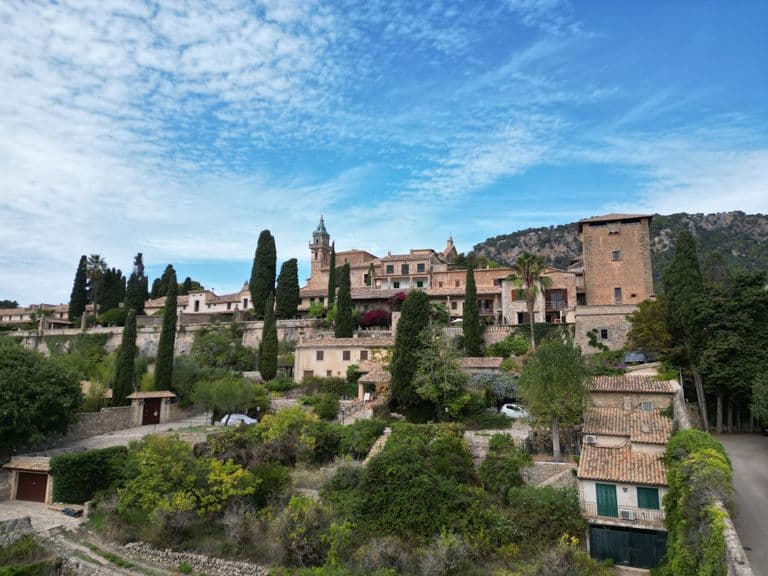
The west-coast town of Valldemossa is most people's introduction to Mallorca's monastic past — and most stop at the famous complex in the centre, never finding the working hermitage 200 metres up the ridge.
Carthusian Monastery Valldemossa is the headline. Chopin and George Sand spent the winter of 1838 in a stone cell that's now everyone's first photo. The ticket covers the palace of King Sancho, the church, the cloister, multiple museums, the gardens, and a short Chopin piano recital — the fifteen-minute concert is what most visitors remember longer than the cloister itself. Climb the tower for rooftops spilling down the valley. Closed Sundays, and the entrance price feels steep unless you go in for the Chopin connection rather than a full afternoon.
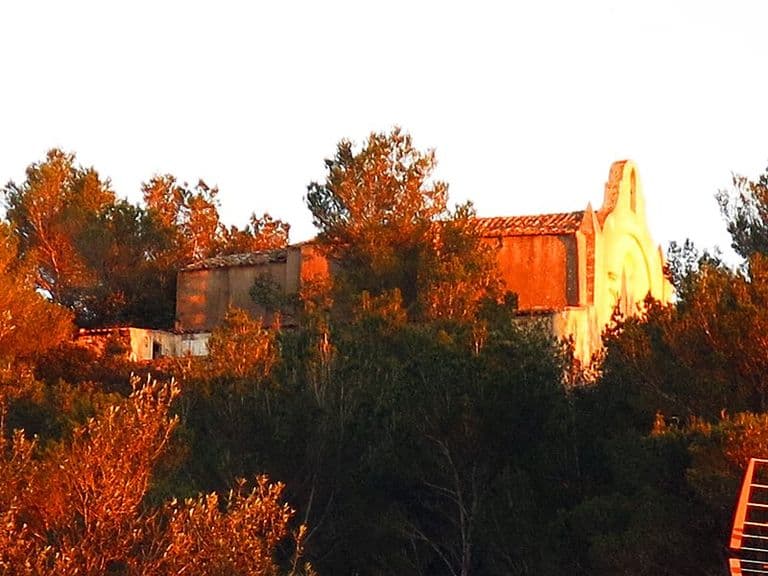
Ermita de la Santíssima Trinitat sits on the ridge above the town and most visitors to the Carthusian never make it up. Don't try to drive the last stretch — the road narrows to one car-width with no turning room at the top. Park at the sandy pull-off near the petrol station on the Valldemossa road and walk the final fifteen minutes; the path runs alongside the road and the views open as you climb. Two hermits still live here, so keep your voice down inside the chapel. A small terrace looks out to the sea, picnic tables sit under the trees, and a tiny shop sells local bits (cash only).
The mountain sanctuaries of central Mallorca
The middle of the island is where the hermitage tradition runs deepest — small chapels on isolated peaks, reached by narrow roads that twist past cyclists grinding their way up.
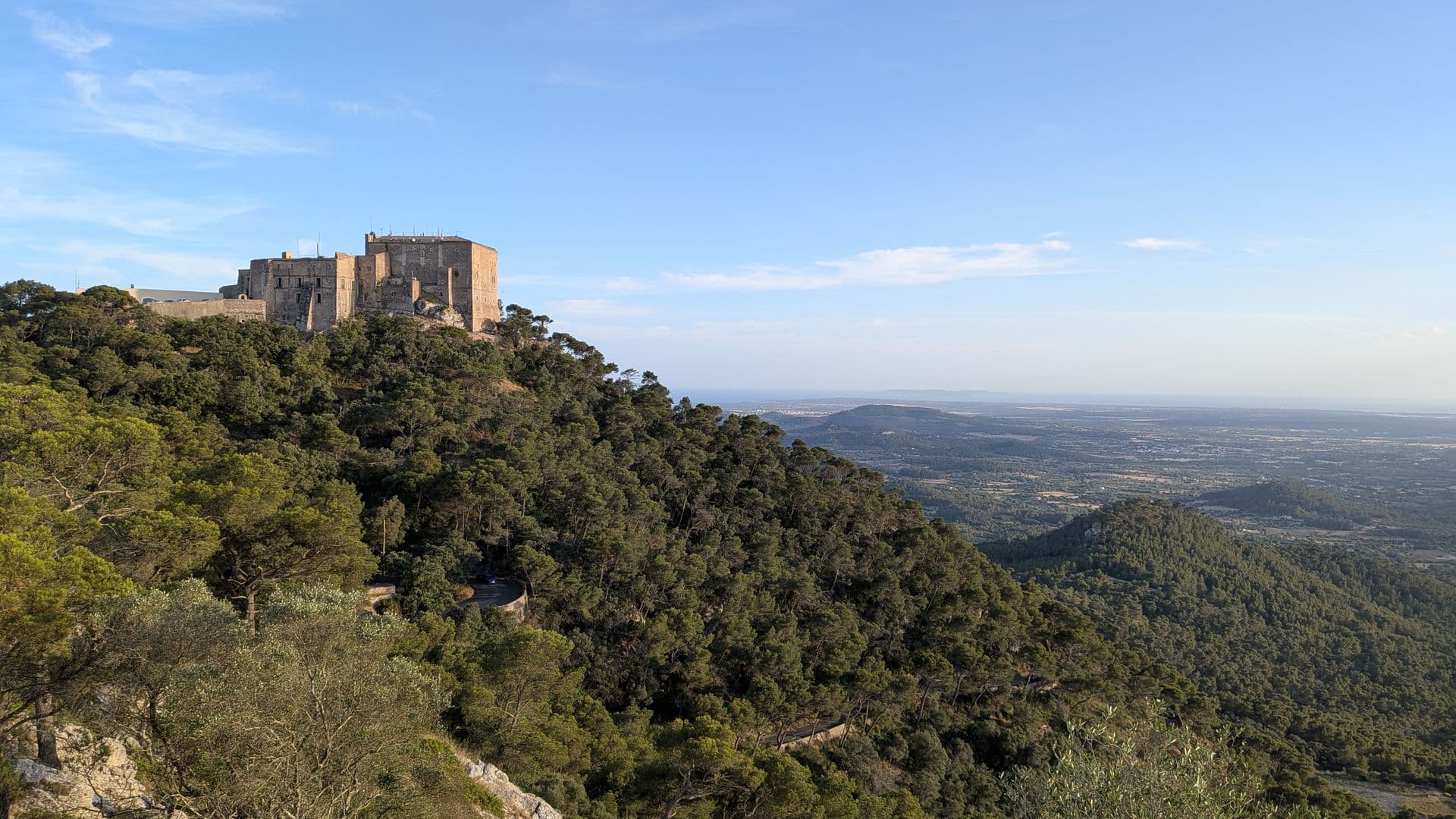
Ermita Sant Honorat is the middle of three monasteries strung along Puig de Randa, the 534-metre mountain just east of Algaida — the closest thing Mallorca has to a sacred mountain. Only the chapel is open to visitors; the cloister, garden, and monk cells stay closed, so set expectations accordingly. The real reason to stop is the view from the terrace over the southern plain. Avoid Sunday mornings unless you want to walk into mass with a full car park.
Ermita de Bonany sits on a hilltop above the village of Petra, reached by a switchback road shared with cyclists. The baroque church is worth a look, but the reason to come is the panorama: on a clear day both the Bay of Alcúdia and the Bay of Palma show up at the same time, with the silhouettes of Randa and Sant Salvador rising on neighbouring hills. Quieter than the famous Lluc monastery further north, even on weekends, and the parking lot at the top means no climb required.
Stone climbs and contemplative outliers
Two more that don't fit neatly into the above, both worth the drive for what each one carries.
Puig del Calvari is the steepest pilgrimage on the island — three hundred and sixty-five stone steps from the old town of Pollença up to a small chapel and mirador, the count matching the days of the year. Locals will tell you each step is a wish. The climb is steady rather than steep; cypresses and shaded stone walls cover the whole way up. There's a tiny café at the top with a view platform twenty metres to the right of the chapel — view yes, café skip. If the steps are out of the question, a narrow switchback road goes up the back side. On Good Friday the steps become the route of the Davallament procession; expect crowds and partial closures in the evening.
Ermita del Rosari is the opposite extreme — a small rural hermitage on a low rise outside Manacor that almost nobody visits, with maybe a handful of reviews across years. Not a tourist stop, a contemplative one. People come here to sit, not to see. Pair it with a slow drive through the back roads east of town and you'll have a Saturday that won't show up in any guidebook.
Mallora's tip — which one, when
If you want the famous monastery experience with the Chopin context, Carthusian Monastery Valldemossa — but pair it with a climb up to Santíssima Trinitat the same morning to balance the touristy with the working.
If you want one hilltop with a big panorama, Ermita de Bonany — the both-bays view is hard to match on this island and the parking lot saves the climb.
If you're an active visitor and the climb is the point, Puig del Calvari with its 365 steps — and if you can time the trip for Good Friday, the Davallament procession is worth the crowds.
If you want the quiet without the crowds, Ermita Sant Honorat in the centre of the island or Ermita del Rosari east of Manacor — both are barely visited and that's the point.
One thing all six share: bring sun cream and a hat regardless of the season. There's almost no shade at the viewpoints, the wind picks up in spring and autumn, and the chapels themselves are cold even in July.