Things to Do in Manacor & East Mallorca
If you ask me where to go in Mallorca when you've already seen the west, the answer points east. East Mallorca has its own rhythm — fewer crowds, longer drives between attractions, and a string of museums, caves, and hermitages that the cruise day-trippers mostly skip. Manacor is the anchor: the second-largest town on the island, half an hour inland from the east coast, and the natural base for radiating out.
This is the day-trip I send friends on when they've put two weeks on the island and the west is already done — and the route I do myself when I want a slow Saturday with one cave, one museum, and a hilltop view. Seven stops, grouped by where they sit on the map. Two are in Manacor town itself, three sit on the road that runs east to the Porto Cristo coast, and two are up in the hills inland — quieter, slower, and the right pick when the caves and dinosaurs need a counterweight.
In Manacor town: a pair of museums on the same road
These two sit 300 metres apart on Carretera de Cales de Mallorca, just south of Manacor's old centre — which means you park once and walk between them.
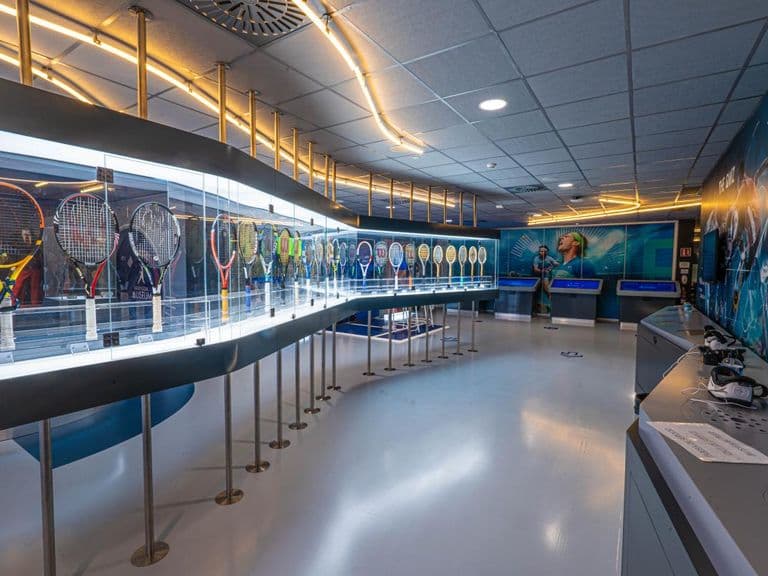
Rafa Nadal Museum is the headline draw. All twenty-two Grand Slam trophies in one room, the racket he won Wimbledon 2008 with, and a Sport-Xperience wing with tennis simulators, F1 rigs, rowing machines and VR rides — that last part is what keeps kids who don't care about tennis from sulking. The audio guide does most of the storytelling, so check yours is functioning at the door; if it glitches, the ticket stings.
Three minutes' walk away, Manacor History Museum sits in the old cloister of Sant Vicenç Ferrer and almost nobody notices it. Free entry, a donation box at the exit, and a hands-on collection running from Talayotic finds through Roman Manacor (try the jar of Roman garum — that smell stays with you) to the town's industrial story. An hour, tops. Closed Tuesdays and Sundays.
The Porto Cristo coast road: caves, dinosaurs, and a lake concert
Drive ten kilometres east of Manacor on the Ma-4020 and three of east Mallorca's most-visited attractions sit within a few minutes of each other.
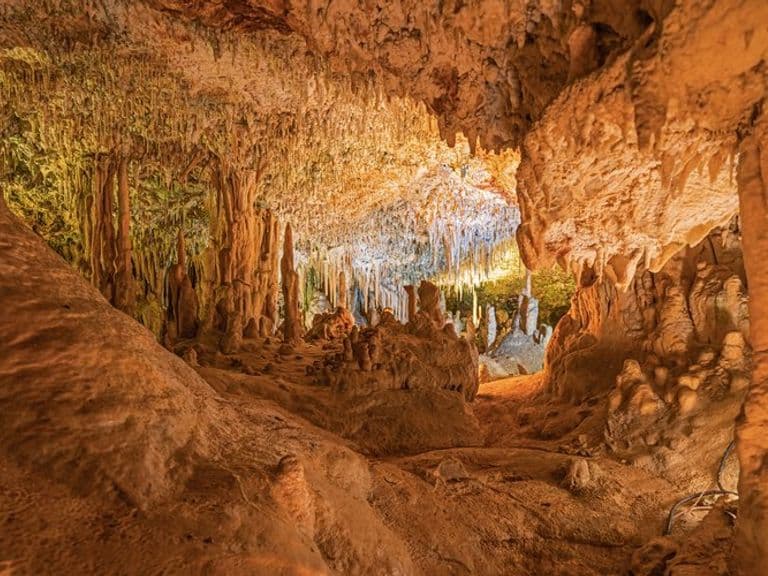
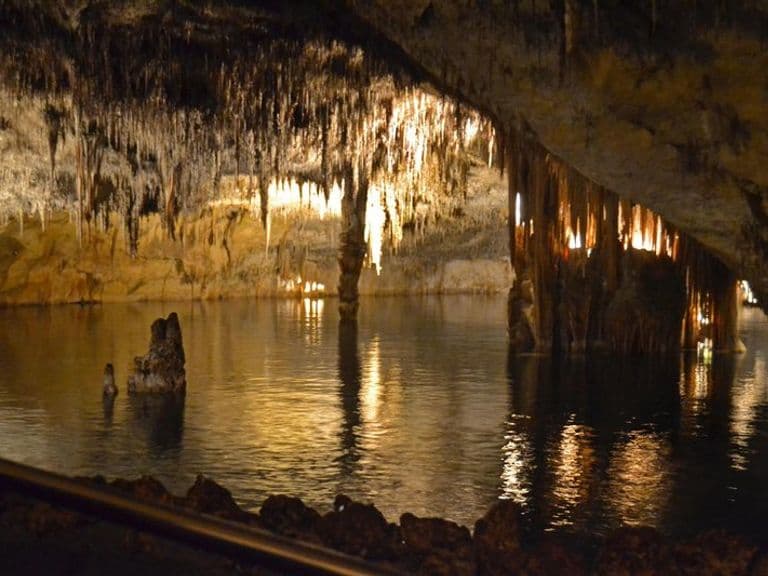
Hams Caves is the cave for couples and families who want the underground-lake concert without the Drach crowds. Hour-long tour: short intro film, a "Genesis" light projection on the rock, walk through the main chamber, ending at the underground lake for a live classical concert. Online tickets include parking, which is worth the click. Kids 4+ do fine; toddlers under three find it long and the concert loud.
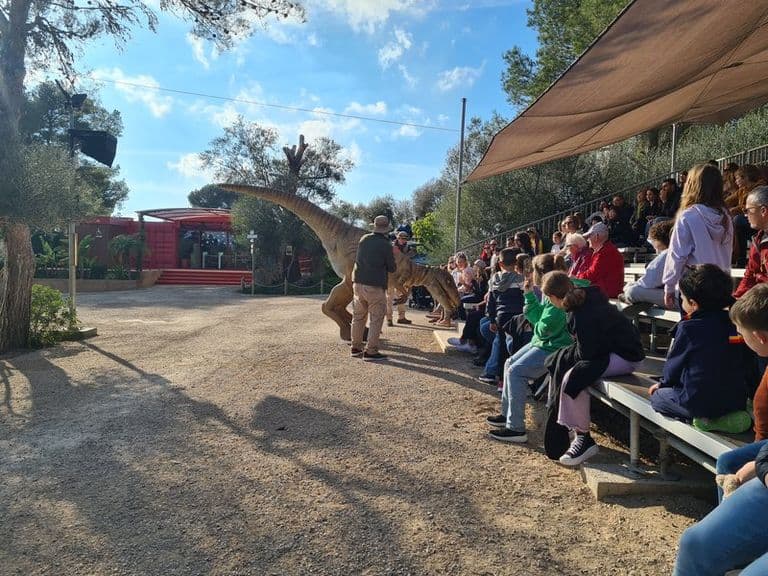
Cross the road and you're at Dinosaurland — forty life-size animatronic dinos along a shaded loop you walk in under an hour, plus a playground at the back and a short live show that the kids love and the parents tolerate. The gift shop is the only exit (negotiate accordingly), the burger stand at the entrance isn't worth your time, and it pairs beautifully with Hams Caves next door for a half-day with kids who've already done one underground experience.
Five minutes further east at Porto Cristo, Coves del Drach is the postcard cave — bigger, busier, and the lake concert at the end is the real reason to come. Book the first morning slot online before you do anything else; same-day slots routinely sell out and walk-ups have waited two hours. For a deeper take on all four cave systems on the island, see the Caves of Mallorca guide.
Inland hills: hermitages and quiet peaks
Half an hour northwest of Manacor the road climbs into the Plà de Mallorca — the central plain — and the rhythm slows. Two stops worth the detour when you want a contrast to the cave-and-museum day.
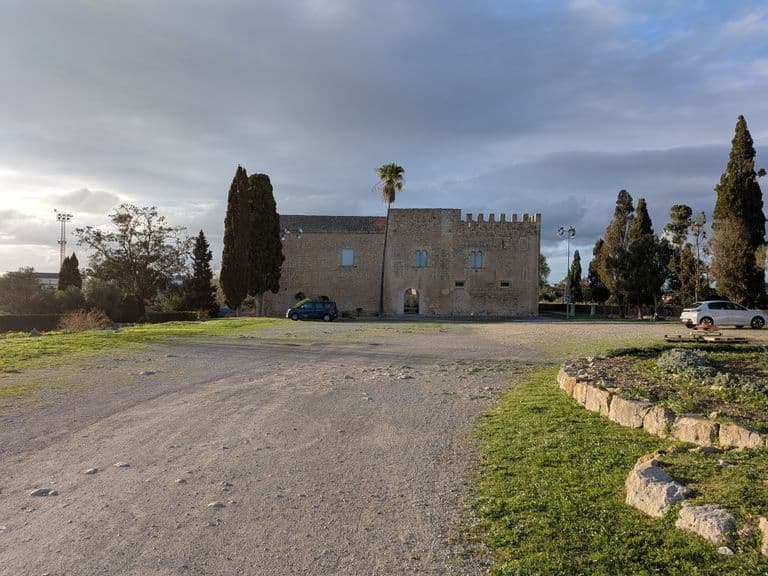
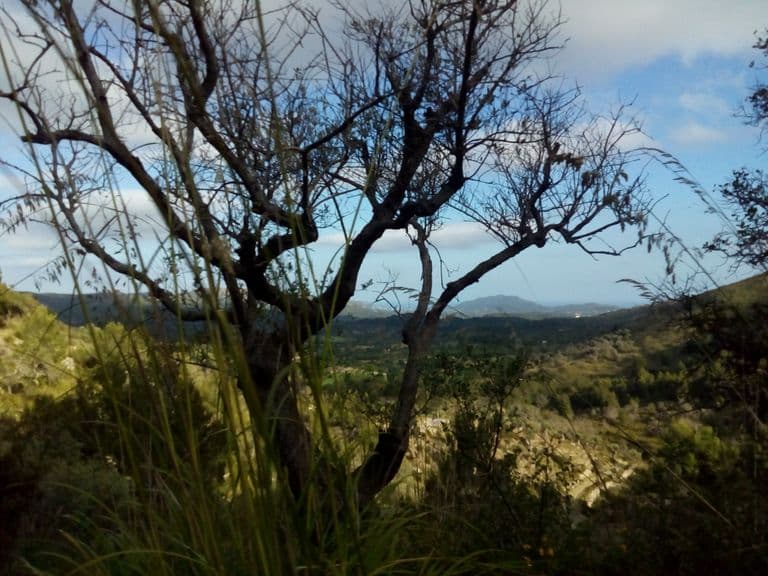
Ermita de Bonany sits on a hilltop above the village of Petra, reached by a switchback road shared with cyclists grinding their way up. The baroque church is worth a look, but the reason to come is the 360-degree panorama: on a clear day both the Bay of Alcúdia and the Bay of Palma show up at the same time, with the silhouettes of Randa and Sant Salvador rising on neighbouring hills. Quieter than Lluc, even on weekends, and the parking lot at the top means no climb required.
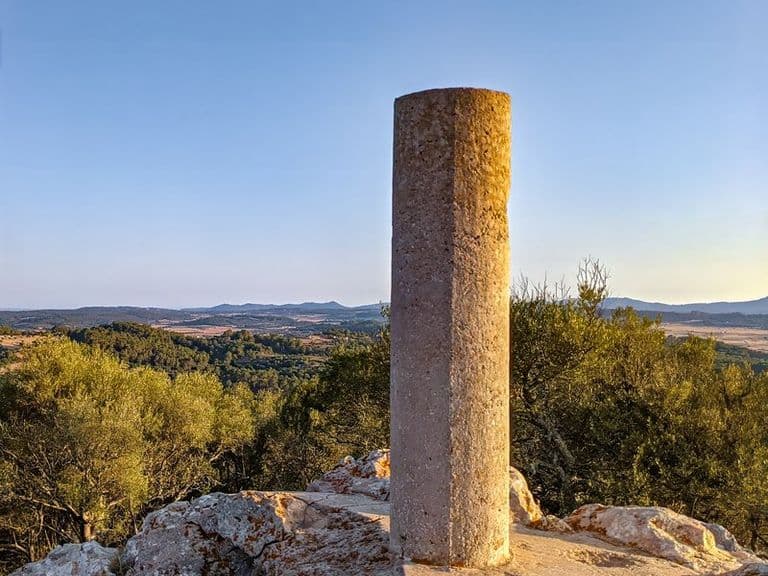
Puig de Sant Nofre is the active option — a twenty-five-minute climb to a ruined 15th-century hermitage in the middle of the plain, with a single picnic table at the top and the Tramuntana ridge sitting on the horizon. Short, well-marked, dog-friendly. The hermitage itself is in ruins, so come for the view and the quiet, not for a restored chapel.
Mallora's tip — which day, which trip
If you've got one day and a car, do the coast road as your spine — Hams Caves and Dinosaurland in the morning, Coves del Drach at the first afternoon slot — and finish on the Porto Cristo waterfront.
If you're with kids who'll cope with one underground experience but no more, do Drach first thing, then Dinosaurland for the energy burn.
If you're a tennis fan or a sports family, Rafa Nadal Museum is the obvious centrepiece — pair it with Manacor History Museum for an hour of context and you've got a half-day in town.
If the day turns grey and you want quiet over crowds, swap the coast road for the inland hills — Ermita de Bonany for the panorama, Puig de Sant Nofre for the short summit.
One thing the whole area shares: kitchens close early outside Palma. If you want a proper sit-down lunch, plan to be at the table by 2 pm at the latest, or you'll find yourself eating from the petrol-station fridge.