Wildlife & Nature Reserves of Mallorca
If you ask me where Mallorca's wildlife actually lives, the answer points away from the package-tourist coast and toward two specific corners of the island. The north has Parc Natural de s'Albufera — the wetland behind Playa de Muro where the migratory birds stop on the way south. The far south has the salt flats next to Es Trenc beach, the aquarium that introduces the Cabrera archipelago, and a botanical garden of cacti that look like they wandered in from Arizona. The middle of the island is olive groves, almond plantations, and wind — beautiful, but not what you came for if you came for nature.
These are the four I send people on when they want a day that isn't another beach — birdwatchers, families with curious kids, retired travellers who'd rather walk a wetland than queue for a slide. Three are in the south within twenty minutes of each other; one sits up north. None require booking ahead unless it's high summer.
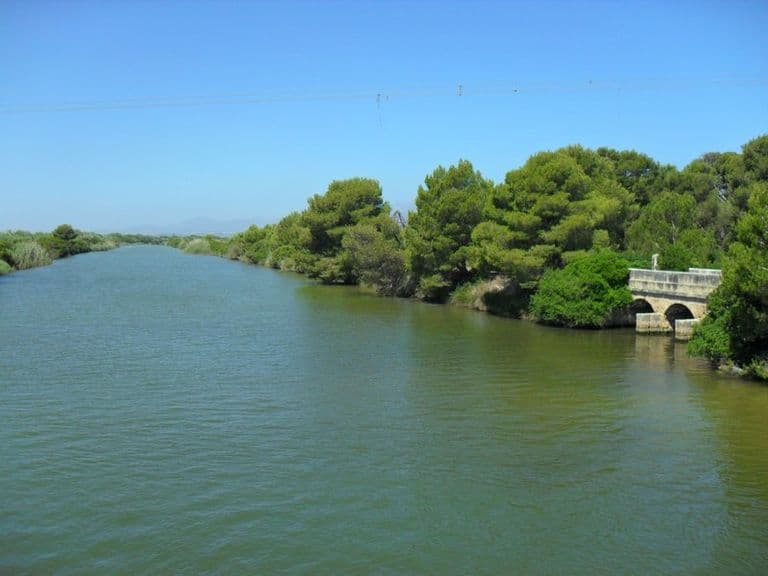
Parc Natural de s'Albufera — the wetland in the north
Mallorca's flagship nature reserve sits behind Playa de Muro and runs to thirteen hundred hectares of reed beds, lagoons, and channels — the largest wetland in the Balearics, recognized as a Ramsar site, and the single place on the island where you can spend half a day with a pair of binoculars and not run out of birds. Check in at the visitor centre first; entry is free, but they log your country of origin and hand you a printed map in English or Spanish (no German). The long loop runs twelve and a half kilometres plus another two from the car park to the info centre, so rent a bike on site if you want the full circuit; the shorter trails around the visitor centre work fine on foot. Wooden hides with slot windows open onto lagoons full of flamingos, avocets, terns and herons. Download Merlin Bird ID before you go — it saves you arguing about whether it was a marsh harrier or a booted eagle.
Salines des Trenc — working salt flats and pink shrimp
A working salt producer next to Es Trenc beach in the deep south, where guided one-hour tours walk you through the production cycle and the ponds shift from white to pink to blue depending on the evaporation stage. English tours run a few times a day; no booking off-season, but reserve in summer or you'll only see the salt mountains from outside the fence. Flamingos are the headline pitch — but they're hit-or-miss; the pink shrimp that feed them are the actual stars and you'll always see those. Combine with the Es Trenc beach right next door for the most efficient salt-and-sea afternoon on the island.
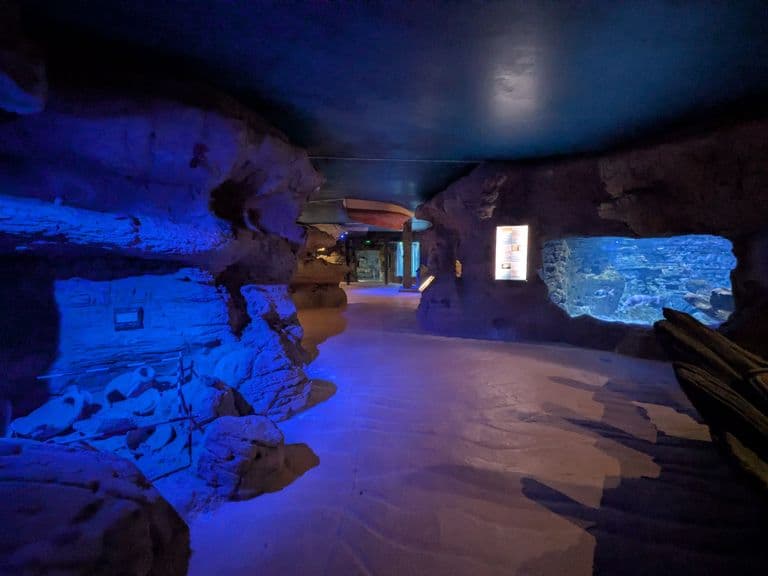
Aquarium Cabrera — a small window onto the offshore national park
A one-room aquarium in Colònia Sant Jordi that introduces the marine life of the Cabrera archipelago — the small, uninhabited cluster of islands off Mallorca's south coast that became Spain's first maritime-terrestrial national park in 1991. The tanks are small, clean, and well looked after, focused on the species you'd see if you took the boat trip across to the islands themselves. Bring headphones: the tank explanations are delivered via QR codes you scan as you walk, and the wifi in the basement room is what carries them. Both lifts have been out of order for months and the rooftop pools sit empty (water shortage), so skip any terrace expectations. Come on a sunny morning and you'll have the whole place to yourself in under an hour.
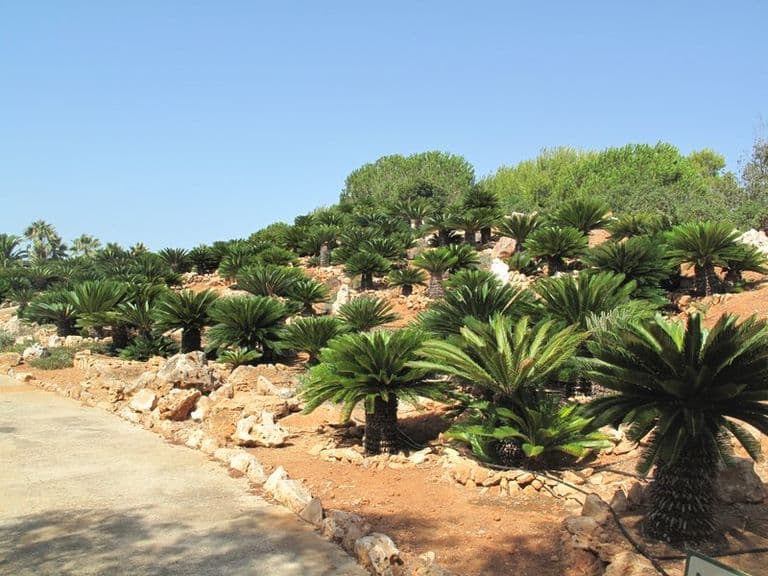
Botanicactus — cacti the size of small cars and centuries-old olives
The botanical garden outside Santanyí, where the headline section holds forty thousand square metres of cactus giants — the kind you'd otherwise fly to Arizona for, plus a stand of centuries-old olive trees that pre-date most buildings on the island. Plan one to two hours at a slow pace; signage on individual plants is thin, so don't expect to leave knowing every species by Latin name. The paths are flat and wide enough for older visitors, wheelchairs and strollers. Late May the cacti flower and the gardens are almost empty — that's the window worth timing for if you can.
Mallora's tip — which one, when
If you're a birdwatcher or you've got a quiet day with a partner who likes binoculars, Albufera is the obvious win — half a day, twelve kilometres if you rent a bike, and the hides reward patience.
If you're on the south coast for a beach day at Es Trenc, Salines des Trenc is the natural one-hour bookend — go before the beach when you're still curious, not after when you're sandy and tired.
If you've got a family with kids and want a short indoor stop between beach mornings, Aquarium Cabrera is the no-effort hour — and the conversation about what's actually offshore at Cabrera might plant the seed for a future boat trip.
If you want a slow walk with older visitors or strollers, Botanicactus — flat paths, shade between sections, picnic tables for after.
One thing all four share: go in shoulder season if you possibly can. April, May, September and October are when the light is best, the heat isn't punishing, and the parking lots actually have spaces. Mid-July at midday on a salt flat is a special kind of regret.