Palma Old Town Walking Guide
This is the walk I send friends on when they've got a free morning in Palma and comfortable shoes. Five stops in the Old Town, half a day on foot, finishing at lunch near Plaça Major. The route crosses the historic centre end to end — you start on the seafront at La Seu and walk north until the Old Town opens onto one of Palma's biggest squares — so by the time you sit down for lunch, you've seen most of the city the postcards are made of. I've done it dozens of times: with first-time visitors, with people who think they already know Palma, with myself when the city feels too loud and I want to remember why I love it.
What's on the route: a Gothic cathedral with the biggest rose window in Europe, the only Arab baths left on Mallorca, a museum with a Talayotic bronze room nobody talks about, a bell tower that opens the city to your feet, and a free modern art gallery to end on.
The order matters. Half the trick is timing each stop to the light, the crowds, and which day of the week you're walking. If we were doing it together, here's how I'd plan it.
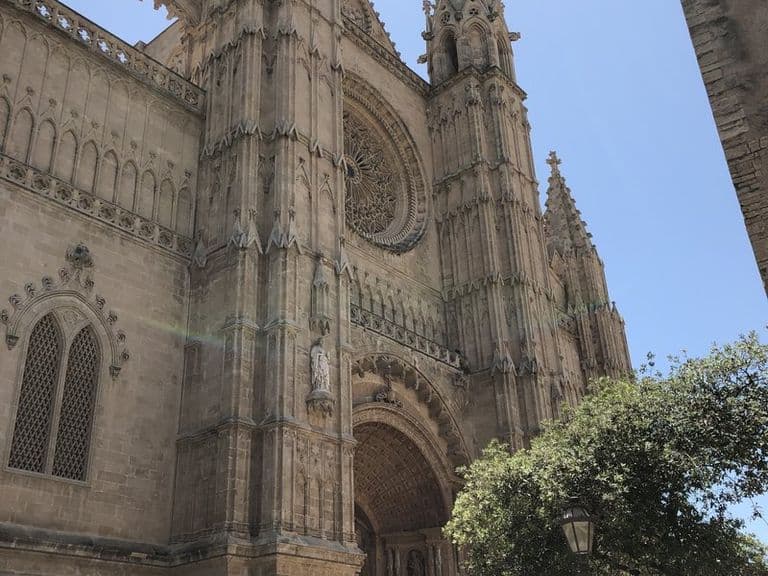
8:30 AM — Start at La Seu
Be at the cathedral door for the first slot. Buy your ticket online before you go — queues stack up by mid-morning and you don't want to lose this window to a line.
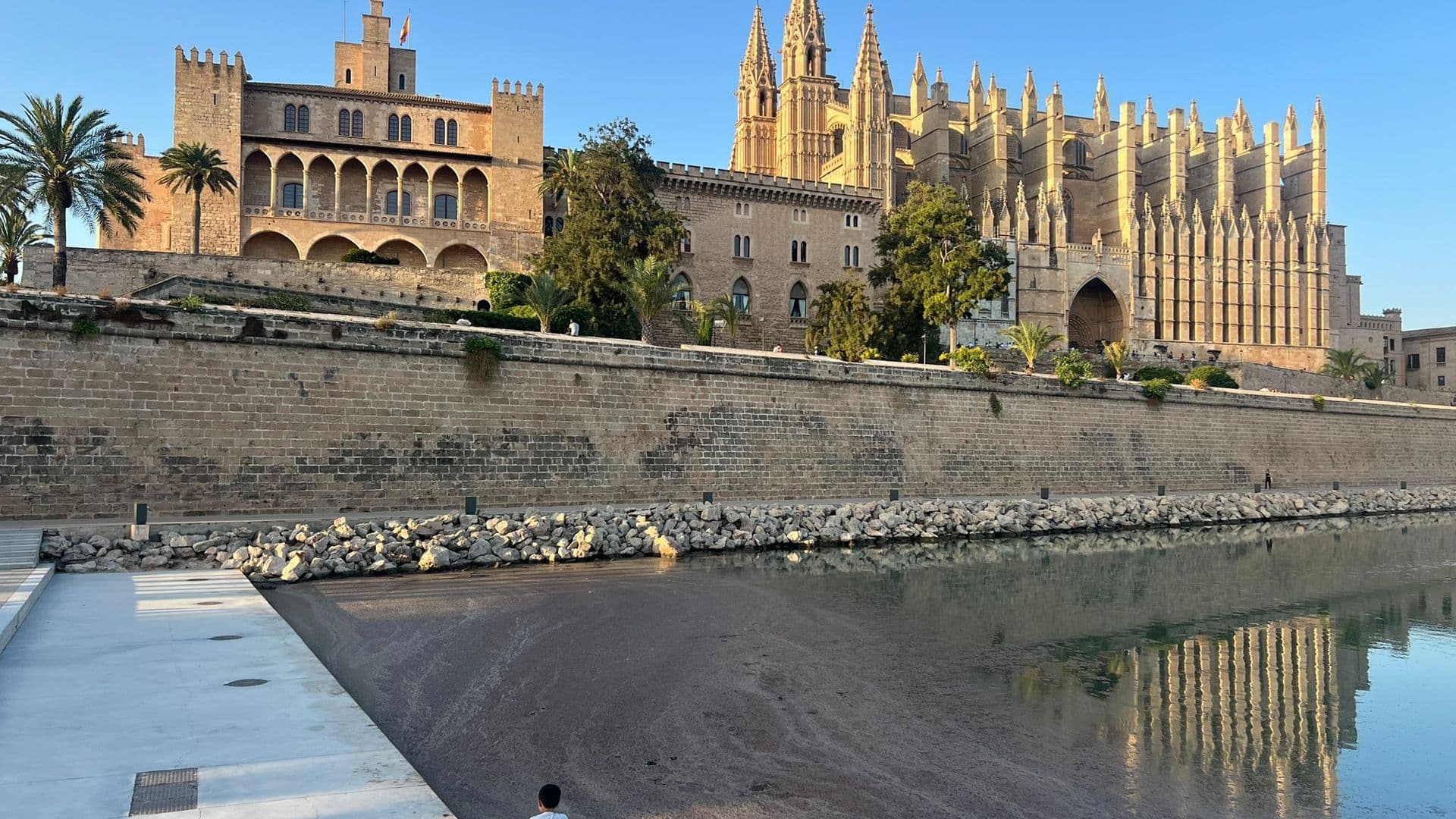
Between 8:30 and 9:00 the sun pierces the stained glass and the nave turns kaleidoscope. The rose window is the largest in Gothic Europe — over twelve metres across — and twice a year (2 February, 11 November) it projects as a figure-of-eight on the opposite wall. Gaudí restored the interior in the early 1900s; his wrought-iron canopy over the altar still divides opinion in Palma.
Plan an hour inside. If it's a Sunday, the cathedral is closed to visitors — flip the route and start at the Museum of Mallorca instead, then double back.
Out by 9:30, walk five minutes behind the apse.
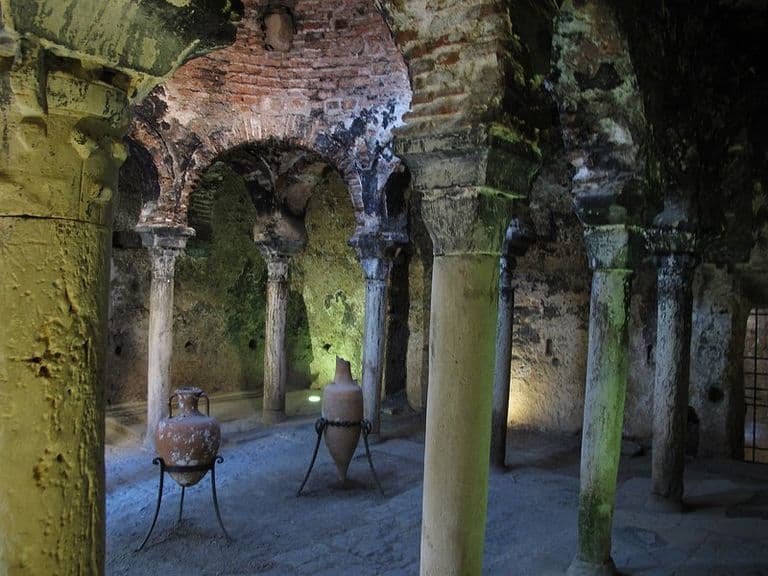
9:45 AM — Banys Àrabs + Museum of Mallorca
These two sit on the same lane — Carrer de Can Serra and Carrer de la Portella, two minutes apart — and pair naturally. Bring a few small coins.
Banys Àrabs first. Cash at the door, no cards. Set expectations: this is two small vaulted chambers from the 10th century — the only surviving Arab baths on the island — plus a walled garden with orange trees and shade benches. The chambers themselves take two minutes. The garden is what makes it worth the stop, especially as a quiet pause between the cathedral crowd and the rest of the route. Fifteen minutes total, longer if the bench calls.
Two doors down, Museum of Mallorca covers the whole island's history from Talayotic prehistory through the 20th century, in a 1634 palace built on top of two Gothic predecessors. The Talayotic bronzes and the small Joan Miró room are the highlights; the medieval religious art floor is skippable unless that's your thing. Climb to the attic for a side-on view of the cathedral nobody mentions. Free on Sundays, closed Mondays — if it's Monday, walk on. Labels are mostly Spanish and Catalan, so lean on a translation app if you want depth.
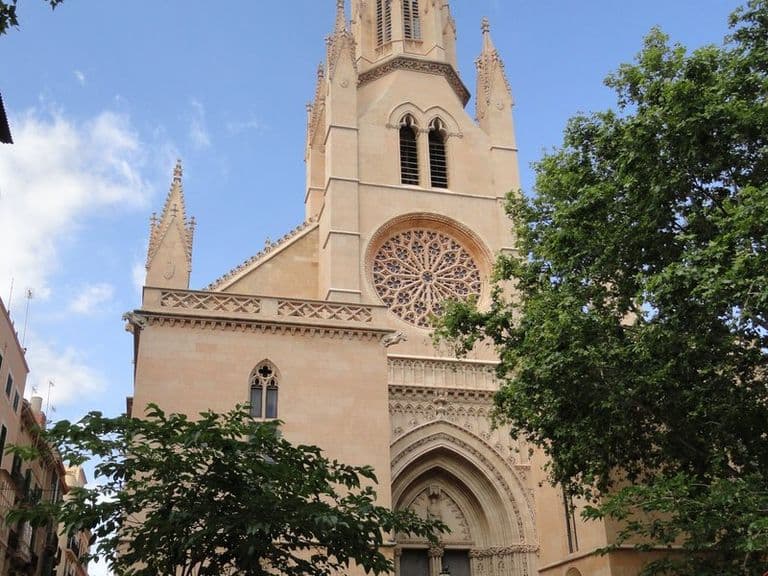
11:15 AM — Climb the bell tower at Santa Eulàlia
Five minutes north through the lanes brings you to Plaça de Santa Eulàlia. The church is Palma's oldest Gothic — built 1236 on the site of a former mosque — and the entry ticket covers both the nave and the climb to the bell tower and roof terrace.
The rooftop view is what you're paying for. Terracotta rooftops, the cathedral spires from above, the sea beyond. Mornings are tourist hours; late afternoons revert to mass and entry is free for worshippers. Closed Saturday and Sunday for tourist visits — if you're walking this on a weekend, swap it for a slow coffee in the plaça.
Photography inside the nave is restricted but the rooftop is open. Half an hour, maybe forty minutes if you linger above.
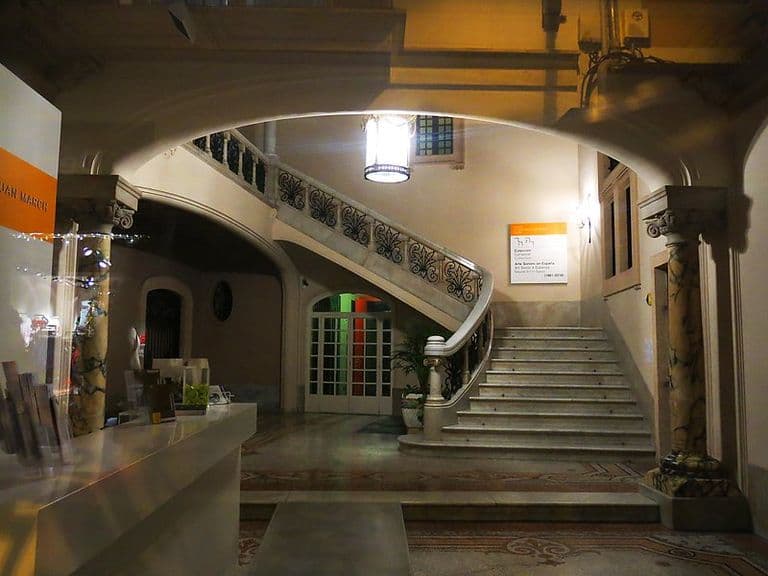
12:15 PM — Finish at Fundación Juan March
Ten minutes' walk north up Carrer de Sant Miquel — Plaça Major opens up just past the foundation door — and you land at the gallery. Three floors, twenty-one rooms, and the permanent collection alone justifies the stop. Miró, Dalí, Picasso, Barceló — all free.
Bring a small coin for the locker; bags don't come into the galleries with you. Plan thirty to forty-five minutes if you're walking through, longer if the temporary photography show pulls you in. Closed Sundays, Saturday morning only — if Monday tripped up the Museum stop earlier, the foundation is still open to make up for it.
That's the route. You're out around one, halfway between Plaça Major and Plaça d'Espanya, two minutes from a tapas lunch either way — or back into the Old Town if you've got a second wind.
Mallora's tip — which day, which route
If it's a weekday morning (Tuesday to Friday), run the route as written — La Seu → Banys + Museum → Santa Eulàlia → Fundación.
If it's Saturday, drop Santa Eulàlia (closed to tourist visits). Replace with a coffee on Plaça de Cort or a slow walk along Passeig del Born.
If it's Sunday, both the cathedral and Fundación close. Start at Museum of Mallorca (free on Sundays), do Banys Àrabs after, and end at a long lunch somewhere in Santa Catalina.
If it's Monday, the Museum is shut. Run the rest of the route — cathedral, Banys, Santa Eulàlia, Fundación — and add an hour at Plaça Major or the markets in the gap.
One thing all five stops share: comfortable shoes. The Old Town is cobbled, narrow, and the bell tower stairs at Santa Eulàlia are not gentle. Save the heels for dinner.